-By Dr.P.V.VartakIntroduction It has been believed that there is no evidence to determine the dates of events in the Ramayanic era. Some historians of the past even refuse to acknowledge that Rama and other characters from the Ramayana even existed. However, Sage Valmiki has recorded the dates if events in detail, albeit by describing the positions of stars and planets. To decipher the astronomical encodings has not been a trivial task, and not many have attempted to do so. It should be noted that the ancient Indians had a prefect method of time measurement. They recorded the 'tithis', days according to the nakshatra on which the moon prevailed, the months, the seasons and even the different Solstices. By therefore noting a particular arrangement of the astronomical bodies, which occur once in many thousand years, the dates of the events can be calculated. Dr. P.V. Vartak has thus attempted to calculate the dates of important incidents that occured during the Ramayanic Era. The correct astronomical records goes to show that Valmiki's has chronicled an account of a true story and also, that the an advanced time measurement system was known to the Hindus (Indians) atleast 9000 years ago. Please refer to Dr. Vartak's celebrated book "Vastav Ramayan" for further reading.
Before coming to the astronomical method, it should be noted that the Mahabharat has recorded a number of facts about Ramayan (and not otherwise). The precedence of the Ramayanic era to that of the Mahabharat can therefore be inferred. An attempt to fix the dates of the events in the Mahabharat era, mainly based on internal astronomical records. The Mahabharat Era has already been dated by Dr. Vartak to 5561 B.C. [Reference: Dr. Vartak's book "Swayambhu"].
Genealogical links available from the Mahabharat and Puranas, Yuga calculations and some archaelogical findings also provide clues to the dating of the Ramayanic era. Also, literary references to the characters from the Ramayanic Era provide limits after which the Ramayan could not have occured. For example, Guru Valmiki (the author of Ramayana) is refered to in the Taittiriya Brahmana (dated to 4600 B.C) and therefore Ramayana must have before the Brahmana was composed. However, archaeological and literary methods can only provide approximate datelines and for determining the precise time of the Ramayanic events, astronomical calculations may alone be useful.
Astronomical DatingMahabharat states that Sage Vishwamitra started counting nakshatras from Shravana (Aadiparva A.71 and Ashwamedha A.44) and a new reference to time measurement thus initiated. According to the old tradition, the first place was assigned to the nakshatra prevelant on the Vernal Equinox. Vishwamitra modified this and started measuring from the nakshatra at the Autumnal Equinox. Sharvan was at this juncture at about 7500 B.C, which is therefore the probable period when Vishwamitra existed and also that of the Ramayanic Era.
Formerly, the year initiated with the Varsha-Rutu (season) and therefore was termed "Varsha". Ramayan shows that the flag was being hoisted to celebrate the new year on Ashwin Paurnima (Kishkindha 16/37, Ayodhya 74/36). Ayodhya 77 mentions that the flags were defaced and damaged due to heat and showers. These descriptions point to the fact that their new year started on the Summer Solstice when heat and rain simultaneously exist. The Summer Solstice fell on Ashwin Full Moon, so the Sun was diagonally opposite at Swati nakshatra. This astral configuration can be calculated to have occured around 7400 B.C.
Kishkindha 26-13 describes the commencement of the rainy season. In shloka 14, refers to Shravan as "Varshika Poorva Masa". Kishkindha 28/2 clearly shows that the rainy season began in Bhadrapada Masa. Further description "Heated by the Sun and showered by new waters, the earth is expelling vapours" (Kish.26/7) points to Bhadrapada as premonsoon. Kish.28/17 tells that there was alternate sun-shine and shadowing by the clouds. Kish.28/14 describes the on-coming rainy season. Thus Bhadrapada was the month of pre-monsoon, that is before 21st June or Summer Solstice. Naturally, months of Ashwin and Kartika formed the rainy season. It is therefore concluded that Ashwin Full Moon coincided with Summer Solstice, that year being 7400 B.C.
Rama started forest-exile in Chaitra and ended it in Chaitra. He was coronated in the same month and one month later, proceeded to Ashokavan with Seeta (Uttar 41/18) when the Shishira Rutu terminated. So it seems that Vaishakha Masa coincided with Shishira. So the Winter Solstice was at Vaishakha with the Sun at Ashwini. At present, the Winter Solstice takes place at Moola. Thus a shift of 10 nakshatras has occured since the Ramayanic Era. Precession has a rate of 960 years per nakshatra. Therefore, Ramayan must have occured 9600 years ago, which is 7600 B.C approximately.
Shri Rama's Date of BirthNow we shall proceed with the astral route. Valmiki records the birth of Rama as Chaitra Shuddha Navami (9th), on Punarvasu Nakshatra and five plants were exalted then; Sun in Mesha upto 10 deg., Mars in Capricorn at 28 deg., Jupiter in Cancer at 5 deg., Venus in Pisces at 27 deg. and Saturn in Libra at 20 deg. (Bala Kanda.18/Shloka 8,9).
Ayodhya 4/18 states that Sun, Mars and Rahu were at Dasharatha's nakshatra. It was the month of Chaitra, so the Sun was in Revati, Ashwini or Bharani. Naturally, either Rahu and Ketu was in any one of these nakshatra (Rahu and Ketu are diagonally opposite).
The planetary positions on 16th October 5561 B.C., the date of commencement of the Mahabharat War, have been calculated and known [Dating of the Mahabharat, by Dr. P.V. Vartak]. Therefore, calculating further backwards for the astral combination noted above, the date concludes to be 4th December 7323 B.C. On this date, Saturn was at 205 deg., Jupiter at 94 deg., Mars between 283 and 298 deg., Rahu at 179 deg. and Sun at 2 degrees. 4th Dec. 7323 therefore is the date of birth of Rama, when the aforementioned 4 planets exalted. Venus is always within 47 degrees from the Sun, and might be in Pisces in an exalted state. Thus Rama's date is confirmed.
The Date of ExileRama completed 17 years of age (Ayodhya 20/45) and his coronation was fixed on Chaitra Shuddha 9th on Pushya day. However, he had to proceed to the forest on the same day, at the behest of Kaikeyi. At this time, Dasharatha states that Rahu, Mars and Sun were disturbing his nakshatra (Ayodhya 4/18). Calculating 17 years from Rama's birth date, the location of Mars can be determined at 303 degrees in Dhanishta nakshatra. From here, Mars casts its fourth-sight on Krittika. Rahu, after 17 years had been at 211 degrees in Vishakha, and so was in opposition to Krittika. Being Chaitra masa, the Sun was at Mesha and so it could be at Krittika. This the planetary positions agree with Valmiki's statement. Dasharatha's nakshatra appears to be Krittika.
Valmiki has beautifully described the sky (Ayodhya 41/10), when Rama left for forest exile. He states, "Crux (Trishankhu), Mars, Jupiter and Mercury have cornered the Moon. Vaishakha and Milky Way are shining in the sky". Crux is on line with Hasta (Corvus) on the southern side. On the eastern side of Hasta, there are Chitra, Swati and Vishakha. As seen earlier, Mars was at 303 deg. in Dhanishta. Calculations show that Jupiter was in Poorvashadha at 251 deg. Pushya was at the western horizon with the setting Moon. On the southern side, from the west to the east, all the other planets were situated. So poetically Valmiki describes the sketch as if the Moon was cornered by the planets. The description of the sky, 17 years after the birth-date of Rama, is perfect astronomically.
After 14 years of Rama's stay in the forest, Valmiki tells that Rohini was imprisoned (6-24-7, 6-93-60, 6-92-60), Mars marched on Rohini (6- 93-46 or 6-92-45) and mars was torturing Rohini (5-17-24 or 5-15-22, 5-19-9, 6-113 or 116-2). The bracketed seven statements show the vicinity of Mars with Rohini. Calculations reveal that 14 years later, Mars was at Ardra and was retrograde. Mars therefore moved in the reverse direction (from Ardra) to Rohini, resided at the "gate" of Rohini, thus in a way imprisoning the latter. It is to be noted that the constellation of Rohini is V-shaped. The apex of the angle points to the west and the two limbs towards east, and therefore appears like a "gate". Mars was situated in between the two limbs (or two doors) of the gate and appeared like a guard. Thus can the simile be explained.
Amavasya (No Moon Day)comes 10.883 days earlier each successive year. 25th November 7323 B.C., 9 days before Rama's birth, was a Amavasya. In 17 years, the Amavasya shifted by 185.011 days backwards. It means that 6 Amavasyas (each 29.53 days) were completed and a shift of 7.8 deg. was noticed. The original Amavasya before Rama's birth took place at 353 deg. Deducting 7.8 deg. from it, we obtain 345 deg. as the position of this Amavasya which falls in the Uttara Bhadrapada nakshatra. Naturally, the next month was Chaitra, when the coronation was arranged on Pushya day at 104 degrees. One 'tithi' contains 12 degrees. So the moon was in Pushya on 29th November 7306 B.C., when Rama proceeded to the forest. Calculations show that this day was a Thursday, so said by Seeta as well(Ayodhya 26/9).
Rama left for the forest on a Thursday, the 29th Nov. 7306 B.C. He completed the required 14 year period in the forest and returned on 5th Shuddha 9th was over, and the 5th tithi refered to must have been Chaitra Krishna 5th. Amavasya recedes by 10.883 days each successive year. So in 14 years it must have receded by 152.3 days. Deducting 5 Amavasya periods (29.53 days each), 4.7 days remain which implies that Amavasya came 4 days days earlier on 15th November 7292 B.C. Calculating backwards for 14 years from 29th November 7306 B.C, when the Amavasya was at 345 deg., the Amavasya falls at 340 deg. (receded by 4.7 days in 14 years). This is Uttara Bhadrapada, the month being Phalguna. Since the next month was Chaitra, Krishna 5th tithi happens to be 5th December 7292 B.C. when Rama entered Bharadwaja Ashram.
Hanuman's visit to LankaHanuman set out to Lanka in the hopes and mission to search for the kidnapped Seeta. He reached this destination at night, roamed around a little until he located Seeta the next morning. While describing Hanuman's return in Sunder Kanda (S.56 or 57 /1/2), Valmiki states using a simile of sea to the sky:
" The Moon was attractive like a lotus, Sun like a good crane and a span from Pushya to Shravana was seen. Punarvasu appeared like a big fish, Mars like a crocodile, Airavata like an island and Swati like a swan."
Even though a poetic simile, Valmiki provides a plot of the nakshatras from the west to the east. When Hanuman started from Lanka it was early morning, because Seeta tells him to rest for a day in some hiding place (Sunder 56/3,11; 57/18). Since it was morning, the Sun was rising and appeared like a crane and the moon like a lotus. As both the moon and the sun were present simultaneously in the sky, it probably was a Paurnima (Full Moon Day) with the moon on the western horizon and sun on the eastern. The span of nakshatras streched from Pushya to Shravan, that is from 104 deg. to 281 deg. Punarvasu was also seen. Aairavat connotes an elephant, and it is possible that Scorpio was seen like an elephant showing its trunk. The span of nakshatra's from Punarvasu to Sharavan is seen early in the morning of Krishna paksha of Pushya Lunar month. Sun-rise could also be seen. Hence, most probably, Hanuman returned from Lanka of Pushya Paurnima or Pushya Vadya paksha.
Hanuman had set out for Seeta's search after Ashwin masa as he himself says in Kishkindha 53/21,22. So he must have started the campaign in Kartika masa. One month, that of Margashirsha was spent in the cave of Swayamprabha. Some more time was spent in the search upto the South sea, after which Hanuman entered Lanka, possibly on Pushya Shuddha 14th. Thus it highly probably that he returned on Pushya Paurnima or Pushya Krishna 1st.
Ravana had abducted Seeta in the season of Hemant (Aranya 16/1) and had given a period of 1 year, that is upto the next Hemant to consider marrying Ravana (Aranya 56/24, Yudh 12/19). Had Seeta not accepted this offer, Ravana would have killed her in Hemant. Hemant is composed of 2 months. Sunder 58/106 or 108 state that Seeta told Hanuman that only 2 months of her life remain, after which she will die. Seeta therefore must have conveyed this to Hanuman before Hemant began, that is, in the season of Sharad. Thus Pushya lunar month coincided with the season of Sharad.
According to the above description, Mars was near Punarvasu and Pushya. It was noted that during the (Lanka) war, Mars was at 102 deg. in Pushya. Naturally, since Mars many a time becomes stagnant, Mars would have been near Punarvasu and Pushya two months earlier.
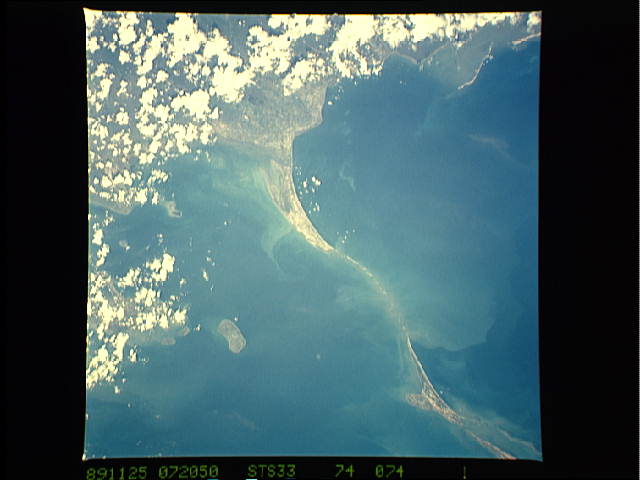
The distance from Kishkindha (Vijayanagar to Hospet) to the centre of Lanka is about 600 miles. An army can travel about 20 miles a day, therefore accordingly, Rama's army would have taken a month to reach Lanka. Even assuming a pessimistic speed of 30 miles per day, Hanuman may have covered the distance in 20 days. Also, it is known that the army of Vaanar tribe were searching for Seeta in many directions, and therefore, may have taken 2 months to reach Lanka. This army had started searching for Seeta in mid-Kartika, and would have reached Lanka in mid-Pausha. The assumption that Hanuman returned from Lanka in the month of Pausha therefore appears to be reasonable. The Vanar army hurriedly returned to Kishkindha and could have spent 20 days in the interim and the date falls at Maagha Shuddha 5th. Rama marched to Lanka in one month and reached there on Phalguna Shuddha 5th (22nd Oct. 7292 B.C). Rama observes, "Today is Uttara Phalguni. Tommorrow when the moon will rise on Hasta, we will proceed to Lanka" (Yudh s.4). Probably on Magha Krishna 1st (2nd Oct. 7292 B.C), Rama commenced his journey and reached the shores of Lanka on Phalguna Shuddha 5th. Subsequent three days were spent before Rama could cross the sea. Phalguna Shuddha 8th ended. Thereafter, starting on the 9th, Nala built a temporary bridge (Seetu) within 5 days. On Phalgun Shuddha 14th (31st Oct. 7292 B.C), Rama's army crossed over to Lanka. On Phalgun Shuddha 15th, a full moon day, Rama positioned his army at strategic points and surveilled the territory from Mount Suvela (Yudh 38/18). Ravan also observed the approaching army from a tower, held a meeting with his ministers and deployed his army for defence. On Phalgun Krishna 1st (2nd November 7292 B.C.), Ravana arranged his troops at strategic points.
The Great War startedOn Phalgun Krishna 2nd, Rama's army seiged the gates of Lanka. Angada proceeded as Rama emmisary on a peace mission to Ravana's court. However, any peace proposal was rejected by Ravana and the next day (Phal.Kr. 3rd), Rama-Ravana war commenced. The great war spanned 13 days and concluded on Phalgun Krishna Amavasya, with the death of Ravana. The very next day, Chaitra Shuddha 1st was celebrated as a Victory Day. This tradition still continues to be a New-Years's Day and is marked by hoisting flags.
End of Rama-Ravana War. Ravana killed.
15th November 7292 B.C was then Phalguna Amavasya. Valmiki states that Ravan came out for the last battle on the Amavasya day (Yudh. 93/66) and was killed. In the description of the battle, Sage Valmiki writes, "Kosala's nakshatra Vishakha is aspected by Mars" (Yudh. 103/37). The annual motion of Mars is 191.405 degrees. In 14 years, it will progress by 159.58 degrees. At the time of Rama's exile, Mars was at 303 deg. 159 deg. added to this provides Mars at 102 deg. in Pushya. From Pushya Mars could cast its fourth-sight on Vishakha. So, the calculations presented so far seem to be correct. It also shows Valimiki's minute observations and time recording capabilities. Thus the date of the last battle of the War is 15th November 7292 B.C.
Following are the dates of few events from the Ramayana:Rama's Birth Date 4th December 7323 B.C
Rama-Seeta Married 7th April 7307 B.C
Rama Exiled 29th November 7306 B.C.
Hanuman enters Lanka 1st September 7292 B.C
Hanuman meets Seeta 2nd September 7292 B.C.
Seetu (Bridge) built 26-30th Oct. 7292 B.C
on the ocean
The War begins 3rd November 7292 B.C
Kumbhakarna is killed 7th November 7292 B.C.
Ravana is killed by Rama 15th November 7292 B.C.
Rama returns to Ayodhya 6th December 7272 B.C.
References
Dr.P.V.Vartak, Vastav Ramayan in Marathi, Vedvidnyana Mandal, Pune